

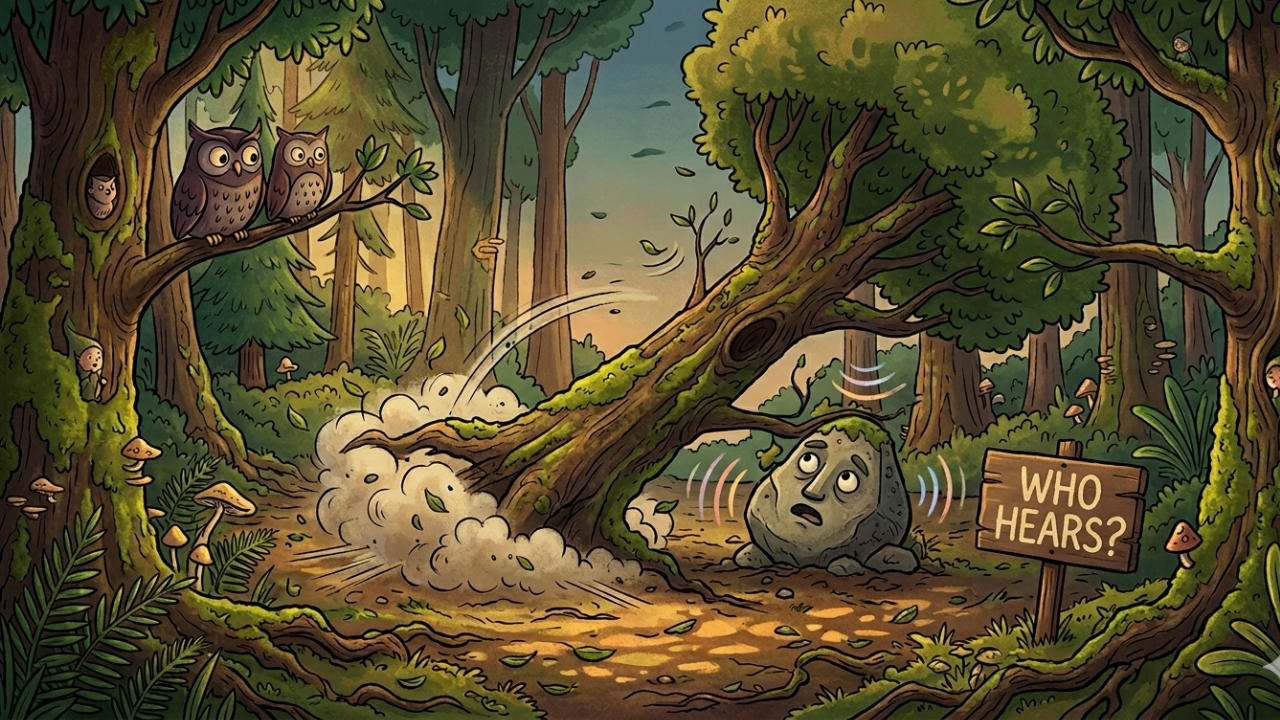
If a tree falls in the woods and no one is around to hear it, does it still make a sound?
Can you guess this right?
If you’ve given up, just scroll down to see the correct answer.
Let´s go!
SEE THE CORRECT ANSWER BELOW:
The question, or one like it, was first posed by Anglo-Irish philosopher Bishop George Berkeley (1685-1783). The answer depends on who you address the question to:
– To a neurologist: No. ‘Sound’ is the action of vibrations on an eardrum. No ears, no sound.
– To a physicist: Yes. The sound waves propagate whether they’re perceived or not.
– To a semanticist: It depends what you mean by ‘sound’.
– To a philosopher: Yes or No (ain’t that always the way?). Can that which is unperceived be said to ‘exist’?
– To a theist: Yes. God perceives the sound.
– To John Locke: Not really. ‘Sound’ is a secondary quality, as is colour; they are both qualities we ascribe to something because of the way we perceive them (whereas shape is an example of a primary quality; ‘roundness’ is a characteristic which exists independently of our perception). The quality of sound is a function of our perception of it.